Carrier Maintenance Plans in Burbank
Fast take: Burbank Carrier HVAC runs seasonal Carrier tune-ups across Burbank, CA - from the Rancho Equestrian District (91506) to the Media District - catching weak capacitors and low charges before valley heat triggers a breakdown. Per-visit checks run about $120-$220; call (213) 277-7557 or book online to set a spring cooling check.
By the numbers
- Two seasonal visits: spring cooling check, fall heating check.
- Per-visit tune-up typically $120-$220; plan pricing bundles both seasons.
- Covers Carrier 26-series AC, 27-series heat pumps, and 59/58-series furnaces.
- Capacitor, contactor, charge, condensate, igniter, and flame-sensor inspection included.
- Service area: 91501, 91502, 91504, 91505, 91506, 91523.
- Hours: Mon-Sat 7am-7pm; emergency calls anytime; raise membership tiers or financing on the booking call and we will lay out the current options.
Why does maintenance matter more on the valley floor?
Burbank's airport-zone microclimate runs 40 to 55 days a year at or above 90 F, with July highs around 90-95 F. That heat load is exactly what kills a marginal capacitor or a coil clogged with cottonwood fluff and Magnolia Boulevard dust. A spring tune-up finds those weak points on a calm Tuesday in March instead of a 100 F Saturday in August. It is the cheapest insurance against a peak-season no-cool call.
| Season | Checks performed | Problem it prevents |
|---|---|---|
| Spring (cooling) | Capacitor, contactor, charge, coil clean, condensate | July no-cool breakdown |
| Fall (heating) | Igniter, flame sensor, inducer, limit/rollout switches | First-cold-snap no-heat lockout |
| Either visit | ECM blower, filter, static pressure, fault history | Short cycling and high bills |
What local conditions make tune-ups pay off in Burbank?
Three Burbank specifics shorten the life of a neglected system. First, the airport-zone microclimate runs roughly 10 F hotter than the LA coast on a summer afternoon, so condensers here run more hours at higher head pressure - hard on capacitors and compressors. Second, cottonwood fluff and Magnolia Boulevard dust pack a condenser coil, raising head pressure and runtime if it is not washed each spring. Third, much of the 1920s-1940s stock has leaky, undersized ducts, so a system already fighting high static pressure has no margin when a part starts to drift. A documented spring and fall visit keeps the coil clean, the charge correct, and the electrical side metered before the heat finds the weak point.
What separates a real tune-up from a sticker-and-go?
A genuine cooling visit puts meters on the system. We log capacitor microfarads against the nameplate so you can see a part drifting toward failure, measure superheat and subcooling to confirm the charge instead of just feeling the air, and pull the Infinity fault history on communicating units. Coil cleaning and a fresh filter are part of it, but the value is in the measurements that flag a problem before it strands you in a heat wave.
Does a plan make sense for a furnace too?
Yes. Most Burbank homes run a Carrier 59 or 58-series gas furnace, and California's Ultra-Low NOx models add components worth inspecting. A fall visit verifies the hot-surface igniter and flame sensor, checks the inducer and pressure switch, and confirms no rollout or limit faults - the failures behind 13, 14, 31, and 34 lockout codes. Catching a dirty flame sensor in October beats a no-heat call on the first cold morning.
What does the spring cooling visit cover, step by step?
The cooling tune-up is built around the parts that fail under Burbank's valley-floor load, worked in order:
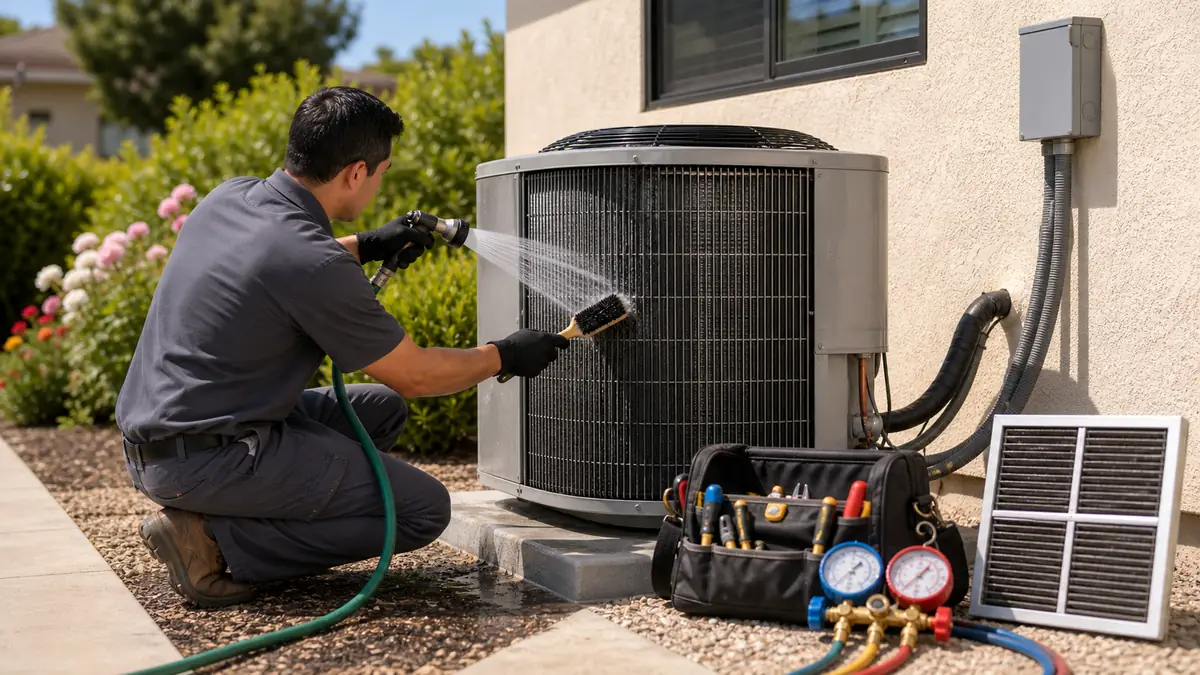
- Capacitor health. Read the dual-run capacitor microfarads against the nameplate; a 45/5 uF cap drifting to 38 is flagged before it strands you in July.
- Contactor and electrical. Inspect contact points for pitting, confirm clean pull-in, and clamp the compressor and condenser-fan amp draws.
- Coil and airflow. Wash the condenser coil clear of cottonwood fluff and Magnolia Boulevard dust, replace or clean the filter, and check static pressure.
- Refrigerant charge. Measure superheat and subcooling to confirm the charge by the numbers, not by feel.
- Condensate path. Clear the drain line and pan, test the float switch, and confirm the pump runs - a clogged drain is a common nuisance shutdown.
- Controls and codes. On a communicating Infinity system, pull fault history and confirm Greenspeed staging; on a conventional system, verify the thermostat call and staging.
When should each visit happen on the valley floor?
Timing is the whole point. The cooling visit belongs in late winter or early spring - February to April - before the first sustained 90 F stretch, so a marginal capacitor or low charge gets caught on a calm March Tuesday rather than a 100 F August Saturday when every shop is booked. The heating visit belongs in early fall - September to October - before the first cold snap, so a dirty flame sensor or weak igniter is fixed before it locks the furnace out on a cold morning. Burbank's 40 to 55 days a year at or above 90 F all land in a tight window, so a system that limps into June will likely fail in the worst week to need a part.
What does maintenance cost, and is it worth it?
The math is straightforward:
- Per-visit tune-up ($120-$220): the metered cooling or heating check above, on a Carrier 26-series AC, 27-series heat pump, or 59/58-series furnace.
- Two-season plan: bundles the spring cooling and fall heating visits; bring up plan pricing and membership tiers when you call to schedule and we will walk you through them.
- What it prevents: a peak-season no-cool call runs after-hours rates ($150-$450 for the common capacitor or contactor fix), and a neglected coil or charge quietly erodes the SEER2 efficiency you paid for.
These are approximate 2026 SoCal ranges. The value is in the measurements - catching a part drifting toward failure before the heat does.
Common questions
When should I tune up my Carrier AC in Burbank?
Late winter or early spring, before the first 90 F stretch. A spring visit catches a marginal dual-run capacitor, a weak contactor, or a low charge while it is still a scheduled fix - not a no-cool emergency in July when the airport zone is logging valley-record heat and every shop is booked solid.
What does a maintenance visit actually include?
On a cooling check we measure capacitor microfarads, test contactor pull-in, read amp draws, clean the condenser coil, check the refrigerant charge and superheat, clear the condensate drain and float switch, and replace or clean the filter. On the heating side we inspect the igniter, flame sensor, inducer, and limit switches and confirm there are no rollout faults.
Does maintenance keep my Carrier warranty valid?
It helps. Carrier's warranty assumes the system is maintained, and documented annual service supports a claim if a part fails. We log each visit. For an in-warranty sealed-system issue you would still go through Carrier's authorized dealer, but the maintenance record strengthens your position.
Is a plan worth it for a newer Carrier system?
Yes - newer Infinity and Performance systems have more electronics (inverter boards, ECM blowers, communicating controls) that benefit from early detection. A clean coil and a healthy charge also protect the SEER2 efficiency you paid for, which oversized or neglected systems quietly lose.
How often should a Carrier system be serviced in Burbank?
Twice a year is the standard here - a spring cooling check and a fall heating check - because the valley floor runs the AC hard for 40 to 55 days at or above 90 F. A pure cooling household with no gas furnace can sometimes run on one thorough spring visit, but a split system with a 59 or 58-series furnace benefits from both seasons covered.
Will skipping maintenance void my Carrier warranty?
It can weaken a claim. Carrier's warranty assumes the system is maintained, and a neglected coil or chronic low charge that damages the compressor can be cited against you. Documented annual service is your paper trail. For an in-warranty sealed-system failure you still go through Carrier's authorized dealer, but the maintenance log strengthens your position.
Related: Carrier AC repair, short-cycling diagnosis, and furnace no-heat.